


Here’s something most creators won’t admit: pouring your heart into a video only to watch it flatline at 47 views feels crushing.
I’ve been there. We’ve all been there. You spend hours crafting the perfect message, editing until your eyes blur, and hitting publish with that familiar mix of excitement and terror. Then the algorithm decides your masterpiece isn’t worth showing to anyone.
But here’s the thing that changed everything for me: YouTube SEO isn’t about gaming the system anymore. In 2025, it’s about understanding what your audience actually wants and giving YouTube enough signals to connect your content with the right people. Think of it less like manipulation and more like translation. You’re helping YouTube understand your value so it can deliver that value to viewers who genuinely need it.
This guide walks you through the exact framework that’s working right now. Not theoretical nonsense or recycled tips from 2019, but the strategies that account for how YouTube’s recommendation engine actually operates in 2025. Because with over 20 billion videos competing for attention across 2.5 billion monthly users, standing out requires both creativity and strategic thinking.
Why YouTube SEO Matters More Than Ever
YouTube remains the second-largest search engine on the planet. People aren’t just searching for entertainment anymore. They’re looking for solutions, education, inspiration, and connection. When someone types “how to optimize YouTube videos” into that search bar, they’re essentially raising their hand and saying, “I need help with this right now.”
Strong SEO puts your content in front of those raised hands.
Consider this: while algorithm-driven recommendations generate most viewing hours, search still drives initial discovery for countless channels. More importantly, videos optimized for search tend to deliver compounding returns. Unlike social posts that disappear within days, a well-optimized YouTube video can attract targeted traffic for months or even years after you publish it.
The opportunity grows even clearer when you look at long-tail searches. Sure, ranking for “YouTube tips” might feel impossible, but “YouTube SEO for small business podcasts” or “how to rank YouTube Shorts without subscribers” still has limited competition and represents someone with a specific, urgent need.
Additionally, YouTube SEO has evolved beyond just ranking in search results. When you optimize properly, you’re also increasing the likelihood that YouTube’s recommendation algorithm surfaces your content to viewers who’ve never heard of you but desperately need what you’re offering. Optimization creates multiple pathways for discovery.
Understanding YouTube’s Algorithm in 2025
YouTube’s algorithm isn’t one system. It’s actually several interconnected algorithms, each designed for different parts of the platform.
The search algorithm kicks in when someone actively looks for content. It evaluates relevance based on your metadata (titles, descriptions, tags, captions) combined with engagement signals (watch time, likes, comments, shares). If viewers consistently click on your video and stick around, YouTube interprets that as relevance and pushes your content higher in search rankings.
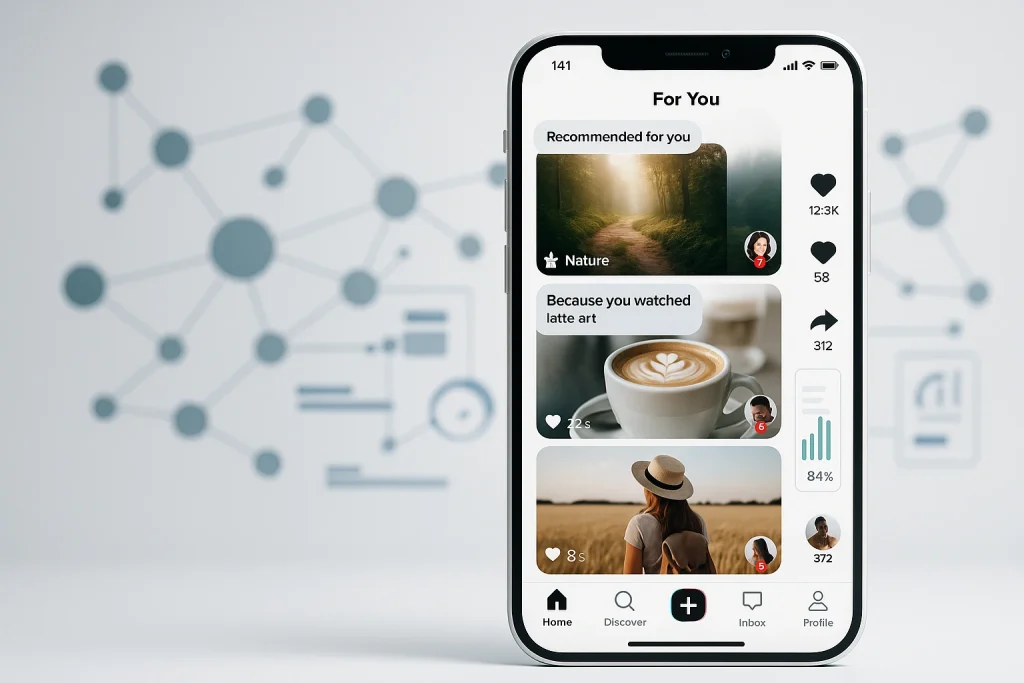
The recommendation algorithm handles the homepage and “suggested videos” sidebar. This system prioritizes viewer satisfaction above everything else. YouTube tracks whether people watch your entire video, whether they immediately click away, whether they like or share it, and whether they continue watching more content afterward. Videos that keep people engaged and on the platform get rewarded with broader distribution.
The Shorts algorithm operates completely separately from long-form content. Shorts prioritize completion rates, replays, and rapid engagement. Because viewers swipe through Shorts feeds rather than actively choosing what to watch, the algorithm measures different signals. A 30-second Short with a 90% completion rate will dramatically outperform a 60-second Short with a 50% completion rate, even if the longer video has more total watch time.
Importantly, YouTube’s algorithms now incorporate real-time learning powered by generative AI. The platform continuously adapts based on what’s working across billions of viewing sessions. This means the algorithm gets smarter at predicting what each individual viewer wants to watch next, personalizing recommendations in ways that weren’t possible even two years ago.
Todd Beaupré, YouTube’s senior director of growth and discovery, put it perfectly: there’s no single answer to what the algorithm prioritizes because different metrics matter for different content types and viewing contexts. Watch time might matter more for educational content, while click-through rate could carry more weight for entertainment. The system learns what works in each situation.
What does this mean for creators? Focus on genuine viewer satisfaction rather than chasing any individual metric. Create content people actually want to watch, optimize it so YouTube understands what it’s about, and the algorithm will do its job of connecting your videos with the right audiences.
The Ranking Factors That Actually Matter
YouTube evaluates dozens of signals when deciding which videos to surface. Some matter more than others, and their importance shifts depending on context. However, certain factors consistently influence visibility across almost all situations.
Viewer satisfaction sits at the top. YouTube conducts millions of satisfaction surveys, feeding responses directly into its recommendation system. When viewers indicate they’re satisfied with your video (through watch time, likes, or simply not clicking “not interested”), YouTube shows your content to more people. Conversely, consistent negative feedback shrinks your reach.
Watch time remains crucial but not in the way many creators think. YouTube doesn’t just want long videos. It wants videos that hold attention relative to their length. A perfectly satisfying 90-second music video can perform just as well as a 20-minute tutorial, as long as viewers stay engaged for the appropriate duration. The key is creating content that delivers value for exactly as long as viewers want to consume it.
Click-through rate measures how often people click your video after seeing the thumbnail and title. While a strong CTR helps, YouTube balances this against total satisfied viewers. Sometimes a video with a modest CTR but high satisfaction reaches more people than a clickbait video with an impressive CTR but poor retention.
Engagement signals like comments, shares, and subscriptions demonstrate genuine interest. However, these function more as reinforcement than primary drivers. A video with tons of engagement but poor watch time won’t get pushed broadly, whereas a video with modest engagement but excellent retention often does.
Search relevance comes from how well your metadata matches what people actually search for. YouTube analyzes your titles, descriptions, tags, captions, and even spoken audio to determine topical relevance. Clear, accurate metadata helps YouTube connect your content with the right search queries.
Session duration tracks whether your video leads viewers to watch more content afterward. Videos that keep people on YouTube longer contribute positively to your channel’s overall visibility. This explains why end screens and playlists matter so much.
Personalization means YouTube tailors recommendations to each viewer based on their history, preferences, and behavior patterns. Your video might resonate strongly with certain audiences while not connecting with others, and that’s completely normal. The algorithm doesn’t expect universal appeal; it expects to satisfy specific viewer segments.
The bottom line? Prioritize creating genuinely valuable content that satisfies viewers. Optimization helps YouTube understand and distribute that value, but no amount of SEO can rescue a video that doesn’t deliver on its promise.
How to Optimize Your Videos Step by Step
Effective YouTube SEO starts long before you hit publish. Here’s the complete process for optimizing every video you create.
Start With Strategic Keyword Research
Everything begins with understanding what your audience searches for. YouTube keyword research differs from traditional SEO because you need to think like a viewer expressing a need, not a writer crafting an article.
Begin with YouTube’s autocomplete. Type your topic into the search bar and note what suggestions appear. These represent real searches from real people. If “YouTube SEO for beginners” pops up when you type “YouTube SEO,” that signals strong demand for beginner-focused content.
Next, validate those ideas with data. Tools like Keyword Analytics for YouTube reveal search volume, competition levels, and related keywords. Look for terms with steady monthly search volume (ideally 500-plus) but moderate competition. These sweet spots give you realistic ranking opportunities.
Study your successful competitors. Identify channels ranking for your target keywords and analyze their approach. What keywords do they emphasize in titles and descriptions? What tags appear consistently across their top videos? Tools like TubeBuddy and vidIQ can surface these insights quickly.
Finally, spot emerging trends before they peak. Use Google Trends with the YouTube filter to identify rising topics in your niche. Creating content on trending topics before they explode gives you a significant head start in the race for attention.
The goal isn’t finding the highest-volume keyword. It’s finding keywords that align with what your ideal viewers genuinely need, where you can realistically compete and win.
Craft Titles That Earn Clicks and Deliver Value
Your title makes a promise. Effective titles combine your target keyword with a clear, specific benefit, typically staying between 60 and 70 characters to display fully across devices.
Lead with your keyword naturally. “YouTube SEO Tips for Beginners” reads better than “Beginners YouTube SEO Tips” because that’s how people actually speak. Natural phrasing improves both readability and relevance.
Promise a specific outcome. “How to Get Your First 1,000 Subscribers in 30 Days” tells viewers exactly what they’ll learn. Vague titles like “My YouTube Journey” tell them nothing useful and fail to communicate value upfront.
Incorporate numbers when relevant. “5 YouTube SEO Mistakes Killing Your Views” or “I Gained 50,000 Subscribers Using These 3 Tactics” grab attention because specificity signals substance. Numbers make abstract promises feel concrete and actionable.
Most critically, your content must deliver on your title’s promise. YouTube measures satisfaction after the click. Misleading titles might temporarily boost views, but they devastate long-term performance because viewers quickly bounce, signaling to YouTube that your video doesn’t match expectations.
Write Descriptions That Work for Humans and Algorithms
Your description serves two audiences: the algorithm trying to understand your content, and viewers deciding whether to watch. Start strong with the first 125 characters, which display before users need to click “show more.”
Open with a compelling hook that summarizes your video’s core value. Then, include your target keyword naturally within the first two sentences. This early placement signals topical relevance to YouTube’s indexing system.
After your hook, elaborate on what viewers will learn or gain from watching. Use natural language that incorporates semantic variations of your main keyword rather than awkward repetition. For example, if your keyword is “YouTube optimization,” naturally mention “video SEO,” “YouTube rankings,” and “improving discoverability” throughout your description.
Include strategic internal links to related videos on your channel. When you reference a concept covered elsewhere, link directly to that video. This keeps viewers in your content ecosystem and increases session duration.
Add external links only when they genuinely support your message. Linking to referenced studies, tools, or resources reinforces your authority and provides immediate value. Use descriptive anchor text like “Download our YouTube SEO checklist” rather than generic “click here” phrases.
Close with a brief call to action encouraging viewers to subscribe, comment, or check out another video. Keep this natural and conversational rather than pushy or desperate.
Leverage Tags and Captions Strategically
Tags provide minor context clues that help YouTube understand your content. Start with your primary keyword, then add 5 to 10 related terms covering common misspellings, synonyms, and topic variations.
For example, if your video targets “YouTube SEO tips,” relevant tags might include “video optimization,” “how to rank on YouTube,” “YouTube algorithm,” and “YouTube growth strategies.” Focus on accuracy over quantity. YouTube ignores irrelevant tags and actually penalizes obvious keyword stuffing.
Captions offer far more SEO value than tags. While YouTube’s auto-captions continue improving, they’re still imperfect. Uploading your own ensures YouTube accurately understands every word you say.
When someone searches for a specific phrase you mention midway through your video, captions help YouTube recognize that your content covers that topic. This increases your chances of appearing in search results and suggested videos for related queries.
For maximum impact, mention your target keyword naturally a few times throughout your spoken content. You don’t need excessive repetition, but verbal mentions combined with accurate captions strongly reinforce topical relevance.
For broader reach, consider adding captions in additional languages where your topic shows demand. YouTube’s multi-language support lets you access international audiences without creating separate videos.
Use Chapters to Create Multiple Discovery Points
Chapters break your video into searchable sections that can appear as key moments in both YouTube and Google search results. This effectively gives one video multiple opportunities to show up in searches.
Adding chapters is straightforward. In your description, include timestamps with descriptive titles:
0:00 Introduction to YouTube SEO
2:15 Finding Keywords That Actually Work
5:30 Writing Titles People Click
8:45 Optimizing Your Video Descriptions
12:20 Using Tags Without Overthinking
Start with 0:00 and include at least three chapters, each 10 seconds or longer. YouTube automatically detects and displays them.
For SEO purposes, treat chapter titles as mini-keywords. Instead of generic labels like “Part 1” or “Next Section,” use descriptive phrases like “YouTube Keyword Research Tutorial” or “How to Write Viral Video Titles.” These specific phrases can rank independently in search.
Chapters also dramatically improve user experience. When viewers can jump directly to the information they need, they watch longer and report higher satisfaction, both metrics YouTube’s algorithm rewards.
YouTube can auto-generate chapters using AI, but manual chapters give you full control over keyword emphasis and section breaks.
Optimizing Your Channel for Long-Term Growth
Individual video optimization matters, but channel-level SEO determines your overall visibility and authority. These elements tell both YouTube and viewers what your channel represents and who it serves.
Set Up Your Channel for Discovery
Your channel name should be clear, memorable, and keyword-friendly. “Marketing Tips with Sarah” beats “Sarah’s Channel” for discoverability every time. Avoid numbers, special characters, or anything difficult to spell or remember.
Write a focused About section that uses your first 100 to 150 characters to summarize your channel’s unique value. This snippet appears in search results, so front-load your most important keywords and clearest benefit statement. If you maintain a consistent upload schedule, mention it to set viewer expectations.
Include essential links to your website, social profiles, or contact information in both your About section and channel banner. This signals professionalism while making it easy for collaborators, viewers, and brands to connect with you.
Create a Channel Trailer That Converts Visitors
Your channel trailer makes the first impression for new visitors. Keep it short (30 to 60 seconds) and immediately answer the most important question: why should someone subscribe?
Lead with your biggest value proposition in the first 10 seconds. “Subscribe for weekly SEO tactics that actually move the needle” beats generic “Subscribe for more” every time because it communicates specific, tangible value.
Show clips from your best content that represent your typical style and quality. If you create tutorials, highlight quick problem-solving moments. If you review products, show exciting reveals. Give potential subscribers an accurate preview of what they’ll get.
Update your trailer every few months to keep it current and aligned with your evolving content strategy. A fresh, relevant trailer signals that your channel is active and worth following.
Organize Content Into Strategic Playlists
Playlists organize your content while increasing total watch time and signaling topical expertise. They keep viewers in your ecosystem longer, boosting session duration.
Instead of broad playlists like “All Videos,” create focused collections around specific topics: “YouTube SEO Tutorials,” “YouTube Analytics Explained,” “YouTube Growth Strategies.” Specific playlists help YouTube understand your expertise in each area.
Treat playlists like mini-channels with their own SEO. Use clear, keyword-rich titles that highlight value: “Complete YouTube SEO Guide for Beginners” beats “SEO Videos” because it communicates exactly what viewers will find.
Order videos strategically within each playlist. Lead with your most engaging video to hook viewers, then arrange the rest in a logical sequence that builds on previous concepts. This structure encourages binge-watching.
Build Recognizable Branding and Consistent Momentum
Consistent visual branding helps viewers instantly recognize your content across search results, recommendations, and social media. Familiarity increases click-through rates and builds trust over time.
Design a clear channel banner that communicates your niche and value. Use the same color palette, fonts, and thumbnail style across all videos. When your content appears in search results or suggested feeds, viewers should immediately know it’s yours.
Establish and maintain an upload schedule. YouTube doesn’t favor specific posting days, but consistency helps viewers know when to expect new content, which boosts engagement and loyalty naturally.
In your channel settings, add keywords that describe your main topics. This helps YouTube understand your niche and surface your videos in relevant recommendation slots.
Together, these elements strengthen your channel’s identity and create predictable growth momentum with both viewers and the algorithm.
YouTube Shorts: The Wild Card in Your SEO Strategy
YouTube Shorts operates on completely different rules than long-form content. Understanding these differences unlocks massive growth opportunities, especially for newer channels.
The Shorts algorithm prioritizes viewer satisfaction through different signals. Completion rates matter enormously. A 30-second Short with 90% completion dramatically outperforms a 60-second Short with 50% completion, even though the longer video has more total watch time.
Replays also signal strong satisfaction. When viewers immediately rewatch your Short, YouTube interprets that as exceptional value and pushes your content to broader audiences.
For optimization, keep Shorts between 15 and 45 seconds for now. While YouTube technically allows up to three minutes, the algorithm is still adapting to longer Shorts, and shorter durations consistently perform better.
Hook viewers within the first second. Shorts viewers swipe fast, so you can’t afford a slow build. Open with your most visually striking or emotionally compelling moment immediately.
Use trending audio when relevant to your niche. Shorts with popular sounds get additional visibility, but only if the audio genuinely fits your content and brand.
Include your primary keyword in the title, description, and first 10 seconds of your voiceover or on-screen text. This helps YouTube understand your Short’s topic and connect it with relevant searches.
Add hashtags strategically. Include #Shorts plus 2 to 3 niche-specific tags like #MarketingShorts or #YouTubeSEOTips. These categorize your content and improve discoverability.
Film in 9:16 vertical format with high resolution and good lighting. YouTube rewards technical quality, and poorly lit or blurry videos get less distribution.
Post Shorts consistently. The algorithm favors active channels because consistent posting provides more data for YouTube to understand your content and audience.
Most importantly, don’t treat Shorts as an afterthought. They’re a legitimate growth engine that can introduce your channel to thousands of new viewers who then discover your long-form content.
Tools That Actually Make a Difference
The right tools save hours and base your strategy on real data rather than guesswork. Here are the most valuable resources for YouTube SEO.
For keyword research: Keyword Analytics for YouTube provides search volume, competition data, and related keywords specifically for the platform. Unlike generic keyword tools, it shows what people actually search for on YouTube.
YouTube’s built-in autocomplete costs nothing and reveals popular searches based on real user behavior. Google Trends (with the YouTube filter) helps spot rising topics early.
VidIQ and TubeBuddy are browser extensions displaying keyword data directly within YouTube. They show tags used by top-ranking videos, search volumes, and competition levels in real time.
For thumbnails and testing: Canva offers YouTube-specific thumbnail templates sized correctly for the platform. TubeBuddy’s A/B testing feature lets you test different thumbnails and titles to see which performs better, removing guesswork from optimization.
For analytics and tracking: YouTube Studio is your primary dashboard. Focus on the Reach tab to understand how viewers discover your content. Monitor watch time, audience retention graphs, click-through rates, and traffic sources.
Google Analytics tracks traffic from YouTube to your website when you include links in descriptions. Set up UTM parameters to identify which videos drive the most valuable conversions.
Start with YouTube Studio and free tools, then upgrade to paid options as your channel grows and your optimization becomes more sophisticated. Most successful creators use 2 to 3 core tools rather than trying to do everything with one platform.
Common YouTube SEO Mistakes That Kill Growth
Even experienced creators make optimization mistakes that quietly undermine their growth. Avoiding these common pitfalls accelerates your progress significantly.
Ignoring viewer intent. Optimizing for a keyword that gets searches but doesn’t match your actual content leads to high bounce rates and poor satisfaction signals. Always ensure your content genuinely delivers on what the keyword promises.
Neglecting the first 15 seconds. If viewers click away within seconds, YouTube learns your video doesn’t satisfy that query and stops showing it. Hook viewers immediately by delivering on your title’s promise in the opening moments.
Keyword stuffing. Cramming your target keyword unnaturally into every sentence makes your content unreadable and triggers YouTube’s spam filters. Use keywords naturally and focus on semantic variations.
Inconsistent posting. Publishing sporadically confuses the algorithm and trains viewers not to expect new content. Even a modest but consistent schedule (like one video weekly) outperforms irregular posting.
Ignoring analytics. Publishing without reviewing what’s working means repeating mistakes and missing opportunities. Spend time in YouTube Studio understanding which videos perform well and why.
Copying competitors exactly. While analyzing successful channels provides insights, directly copying their approach saturates an already-crowded space. Find your unique angle on popular topics.
Forgetting about existing content. Your older videos can still attract views with minor updates. Refresh thumbnails, update descriptions, and add chapters to older content to give it new life.
Overcomplicating everything. YouTube SEO doesn’t require perfection. Solid keyword research, clear titles, accurate captions, and genuinely valuable content will outperform elaborate optimization of mediocre videos every time.
What Actually Works in 2025: A Quick Checklist
Before you publish your next video, run through this optimization checklist to maximize its potential.
Before creating:
- Research target keyword using autocomplete and Keyword Analytics
- Check competitor videos ranking for your keyword
- Plan video structure with chapters matching search intent
During production:
- Mention target keyword naturally 2 to 3 times in spoken content
- Film engaging intro delivering on title promise within 15 seconds
- Create clear audio for accurate captions
When publishing:
- Write compelling title under 60 characters with target keyword
- Front-load description with most important information in first 125 characters
- Add 5 to 10 relevant tags starting with target keyword
- Upload custom captions if auto-captions aren’t accurate
- Add manual chapters with keyword-rich timestamps
- Create custom thumbnail that stands out and matches content
After publishing:
- Add to relevant channel playlists
- Respond to early comments quickly to boost engagement
- Monitor YouTube Studio analytics after 24 to 48 hours
- Note which traffic sources drive views and adjust strategy
Following this checklist consistently transforms your optimization from guesswork into a repeatable system that compounds over time.
The Real Secret: It’s About People, Not Algorithms
Here’s what nobody tells you about YouTube SEO: the algorithm is actually on your side.
YouTube’s only goal is keeping viewers happy and engaged. When you create content that genuinely satisfies viewers, when you help them solve real problems or feel something meaningful, YouTube desperately wants to show that content to more people.
Optimization simply helps YouTube understand who needs your content and when. It’s translation, not manipulation. You’re giving the algorithm the context it needs to connect your value with the right audiences at the right moments.
The creators who win long-term don’t outsmart the system. They understand their audience deeply, create content that serves real needs, and optimize strategically so YouTube can do its job of distribution.
Think about it differently. Instead of asking “How do I game the algorithm?” ask “Who am I serving, and how can I help YouTube connect my best work with the people who need it most?”
That mindset shift changes everything.
Because at the end of the day, YouTube SEO isn’t about keywords and metadata and watch time percentages. It’s about building something valuable enough that people want to watch it, clear enough that YouTube understands it, and strategic enough that the right people actually discover it.
Master that combination, and growth becomes inevitable.
Now go create something worth optimizing.
Want predictable YouTube growth? Hyper Fuel audits your channel, fixes titles and thumbnails, and delivers a 90 day plan. Ask for a free snapshot.
Frequently Asked Questions About YouTube SEO
Most videos show initial performance within 24 to 48 hours, but meaningful SEO results typically take 2 to 4 weeks as YouTube’s algorithm gathers data on viewer satisfaction. Well-optimized evergreen content continues attracting views for months or years.
Both matter, but recommendations drive about 70% of watch time on YouTube. Focus on creating satisfying content that keeps viewers watching, while optimizing metadata for search to aid initial discovery. The two strategies complement rather than compete with each other.
Tags provide minor context clues but carry far less weight than titles, descriptions, and captions. Use 5 to 10 accurate, relevant tags, but don’t obsess over them. Focus your optimization energy on creating compelling titles and comprehensive descriptions instead.
Thumbnails dramatically impact click-through rate, which influences overall performance. A strong thumbnail doesn’t directly affect search rankings but increases the percentage of people who click when they see your video, leading to more data for YouTube’s algorithm to evaluate.
Yes, and you should when you spot opportunities to improve. YouTube allows updates to titles, descriptions, thumbnails, and tags. Monitor performance for 48 hours, then adjust elements that aren’t working. Testing different approaches often uncovers significant improvements.
Focus on one primary keyword per video, then naturally incorporate 3 to 5 related secondary keywords throughout your metadata. Trying to rank for too many unrelated keywords confuses YouTube and dilutes your topical relevance.
Video length matters less than watch time and retention rate. YouTube rewards videos that hold attention appropriately for their length. A 5-minute video with 80% average view duration typically outperforms a 20-minute video with 30% average view duration.
Both formats serve different purposes. Long-form content typically drives deeper engagement and stronger SEO benefits over time, while Shorts excel at rapid audience growth and introducing your channel to new viewers. The most successful strategies incorporate both.
Consistency matters more than frequency. Posting one quality video weekly on a predictable schedule typically outperforms sporadic posting of multiple videos. YouTube rewards channels that train viewers to expect and return for regular content.
Absolutely. YouTube actively gives newer creators opportunities to reach audiences. Strong SEO combined with genuinely valuable content allows even brand-new channels to rank for less competitive keywords and appear in suggested video slots.
Optimal posting times vary by audience. Check your YouTube Studio analytics to see when your specific viewers are most active. Generally, Tuesday through Thursday between 2 PM and 4 PM performs well, but your audience’s behavior should guide your schedule.
Engagement signals reinforce performance but don’t drive it independently. A video with tons of comments but poor watch time won’t get broad distribution. However, strong engagement combined with solid retention amplifies your reach significantly.
Generally, no. Even underperforming videos contribute to your channel’s content library and can attract occasional views from long-tail searches. Instead of deleting, consider updating thumbnails, titles, and descriptions to improve their performance.
No. Your subscriptions don’t impact your channel’s SEO or algorithm performance. Focus on creating valuable content and optimizing it properly rather than trying to game the system through subscriptions or other artificial tactics.